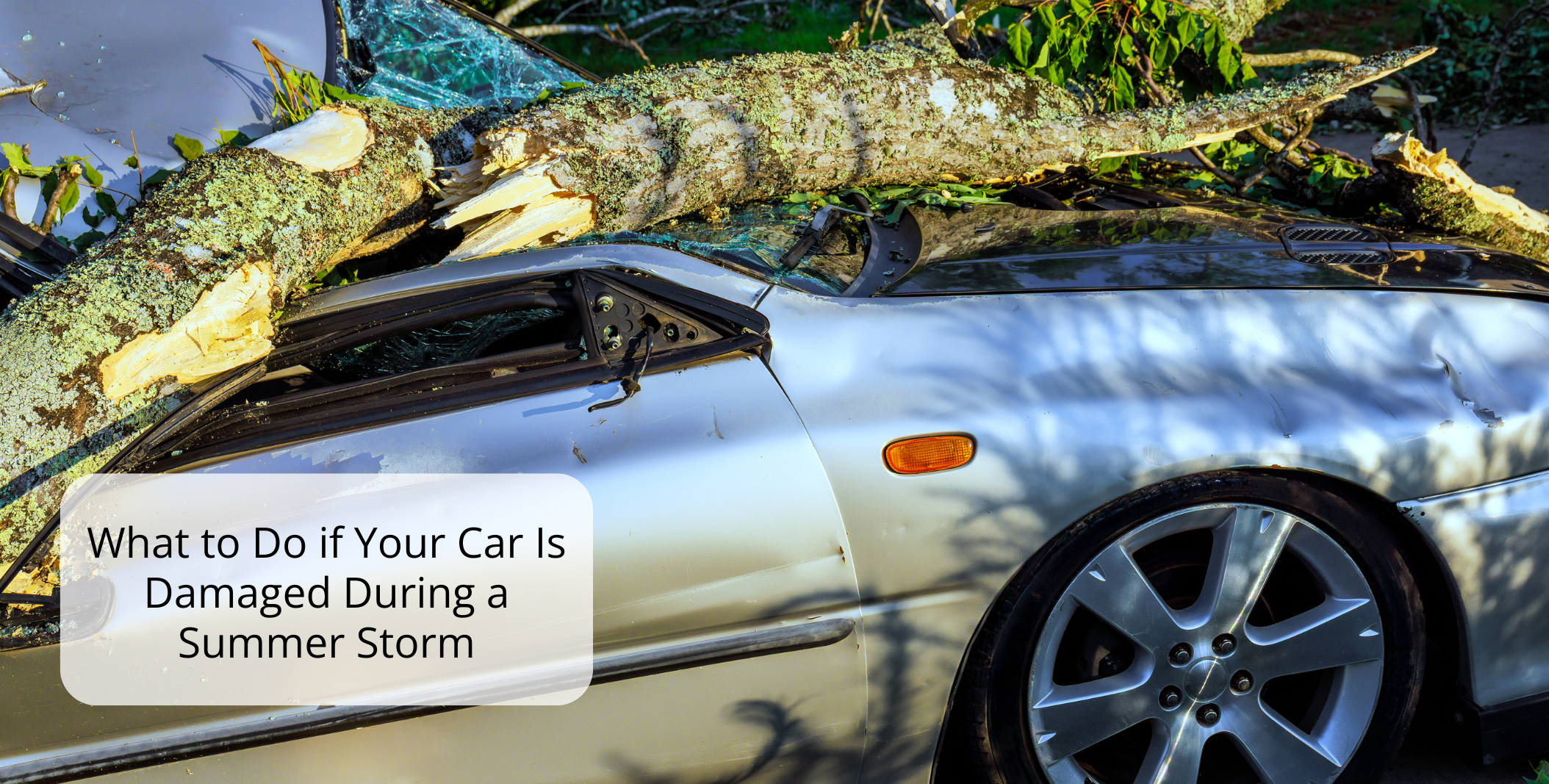
Summer storms can develop rapidly, bringing heavy rain, strong winds, lightning, and hail. While drivers often focus on navigating wet roads safely, these weather events can also cause damage to parked vehicles. From a falling tree branch to rising floodwaters, storm damage can introduce unexpected expenses and logistical challenges.
Knowing the typical steps to document a loss and understanding how auto insurance generally applies can help vehicle owners navigate the aftermath of a seasonal storm.
Immediate Steps Following Storm Damage
If you discover that a storm has damaged your vehicle, taking specific sequential actions can help clarify the situation for a potential claim.
- Prioritize Safety: Before approaching the vehicle, it is important to confirm that the area is safe. Many people avoid standing water or downed power lines, which can present immediate hazards.
- Avoid Starting a Flooded Vehicle: If water has risen high enough to submerge portions of the vehicle, attempting to turn on the engine can cause severe mechanical or electrical damage. It is generally recommended to leave the ignition off until a professional technician evaluates the vehicle.
- Document the Condition Thoroughly: Capturing clear photos and videos from multiple angles is a common practice. This typically includes wide shots of the vehicle in its surrounding environment, as well as close-ups of specific impacts, cracked glass, or waterlines.
- Mitigate Further Damage: If a window is broken or a sunroof is cracked, covering the opening with a tarp or plastic sheeting can help prevent additional rain from damaging the interior. Keeping receipts for temporary materials used is often helpful, as some policies may assist with these mitigation costs.
Understanding How Insurance Typically Applies
Auto insurance is built on different components that target specific types of damage. It is helpful to review which parts of a policy generally respond to storm-related events.
Other-Than-Collision Coverage
Physical damage caused by weather events is typically handled under the portion of a policy known as Other-Than-Collision coverage.
Depending on the specific policy terms, this component often assists with damage resulting from:
- Hail: Dents to body panels or cracks in the windshield.
- Falling Objects: Tree limbs, roof tiles, or debris thrown by high winds.
- Floodwaters: Rising surface water that enters the cabin or engine bay.
- Lightning: Strikes that damage electrical components.
This coverage is generally optional if you own your vehicle outright, though lending institutions typically mandate it for financed or leased cars.
The Role of Deductibles
Other-Than-Collision claims are almost always subject to a deductible—the fixed out-of-pocket amount the policyholder agrees to pay before insurance benefits apply. If the repair estimate is lower than the deductible, the vehicle owner is typically responsible for the cost of the repair.
Navigating the Repair Process
Once the damage is documented, the process of restoring the vehicle generally involves coordinating with a repair facility.
- Reporting the Incident Promptly: Contacting your insurance provider or agent early helps initiate the review process. Being prepared to share your documentation can help explain the scope of the damage.
- Obtaining Professional Estimates: Working with a licensed auto body shop or mechanical facility allows you to receive a detailed, written breakdown of repair costs. In 2026, advancing automotive technology—such as sensors embedded in bumpers and windshields—means that even seemingly minor storm damage can require complex recalibration, affecting overall repair timelines and costs.
- Total Loss Evaluations: If the projected repair costs exceed a certain percentage of the car’s actual cash value, the insurance carrier may determine that the vehicle is a total loss, providing a payout based on the vehicle’s depreciated market value minus the deductible.
Reviewing Your Insurance Portfolio
Summer convective storms are expanding across many regions, bringing unpredictable weather patterns that can change risk profiles quickly. Reviewing your policy details before a storm occurs allows you to verify your current limits and deductible amounts.
Independent insurance agents are available to assist by providing information on various policy choices and explaining how different coverage tiers operate. An agent can help review your existing physical damage options and discuss specific policy exclusions, helping you make informed choices that fit your household’s financial goals.
Disclaimer: The information provided in this article is for educational purposes only. This is not an insurance policy or a legal contract. Coverage options, limits, and exclusions vary significantly by state, insurance provider, and individual policy terms. Policy claims are subject to the specific terms, conditions, and exclusions of the policy in force at the time of the loss. It is important to consult with a qualified insurance professional for advice tailored to your specific circumstances.